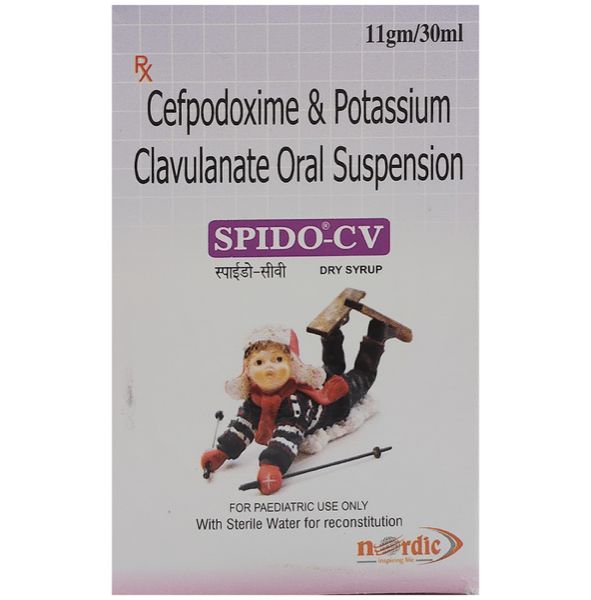
About Spido CV Oral Suspension
Spido CV Oral Suspension is a potent antibiotic made up of two active medicines. It is given to children to treat a wide range of severe bacterial infections targeting the ear, throat, lungs, skin, and urinary tract. It works by inhibiting the growth of bacteria thereby preventing the infection spread. Give this medicine to your child an hour before or two hours after meals. If your child develops a stomach upset, prefer giving it with food. Make sure to stick to the prescribed dose because it is given keeping in mind the type of infection, its severity, and the age and bodyweight of your child. In case your child gags and expels the medicine within 30 mins of intake, repeat the same dose but do not double dose if it's the time for the next dose. Some of the minor and temporary side effects of this medicine include vomiting, diarrhea, nausea, rash, and headache. Usually, these episodes subside once your child’s body adapts to the medicine. However, if these effects persist or become bothersome for your child, call the doctor right away. Narrate your child’s complete medical history to your child’s doctor, including any previous episodes of allergy, heart problem, blood disorder, birth defects, airway obstruction, lung anomaly, gastrointestinal problem, skin disorder, liver impairment, and kidney malfunction. This information is critical for dose alterations and for planning your child’s overall treatment.
Uses of Spido CV Oral Suspension
- Treatment of Respiratory tract infection
Respiratory tract infections are those infections that can affect the sinuses, throat, airways or lungs. Spido CV Oral Suspension contains two different medicines, Cefpodoxime Proxetil and Clavulanic Acid, that work together to kill the bacteria that cause respiratory tract infections. Cefpodoxime Proxetil works by stopping the growth of bacteria. Clavulanic Acid reduces resistance and enhances the activity of Cefpodoxime Proxetil against bacteria. It usually makes you feel better within a few days, but you should continue taking it as prescribed even when you feel better to make sure that all bacteria are killed and do not become resistant.
How to use Spido CV Oral Suspension
Take this medicine in the dose and duration as advised by your doctor. Check the label for directions before use. Measure it with a measuring cup and take it by mouth. Shake well before use. Spido CV Oral Suspension may be taken with or without food.
How Spido CV Oral Suspension works
Spido CV Oral Suspension is a combination of two medicines: Cefpodoxime Proxetil and Clavulanic Acid. Cefpodoxime Proxetil is an antibiotic. It works by preventing the formation of the bacterial protective covering which is essential for the survival of bacteria. Clavulanic Acid is a beta-lactamase inhibitor that reduces resistance and enhances the activity of Cefpodoxime Proxetil against bacteria.
Side effects of Spido CV Oral Suspension
Most side effects do not need medical attention and go away as your body adjusts. Talk to your doctor if they persist or worry you. Common side effects include:
- Nausea
- Rash
- Abdominal pain
- Vaginal infection
- Headache
- Diarrhea
If you miss a dose
Do not panic. Unless your child’s doctor has advised a specific regime for your child, you can give the missed dose as soon as you remember it. Skip the missed dose if it is almost time for the next dose. Follow the prescribed dosing schedule and do not give the double dose to catch up.
Storage
Store below 30°C. Keep out of the reach of children. How to store medicines at home.
Safety advice
Spido CV Oral Suspension is safe to use in patients with kidney disease. No dose adjustment is recommended. However, dose modifications may be required in children with severe kidney disease. Consult with your doctor.
Spido CV Oral Suspension is safe to use in patients with liver disease. No dose adjustment is recommended. However, consult with your child’s doctor before giving Spido CV Oral Suspension to your child in case of a severe form of liver disease.
Frequently asked questions
What if I give too much of Spido CV Oral Suspension by mistake?
Spido CV Oral Suspension is safe and usually an extra dose of it would not do any harm. But since overdose increases the risk of side effects and may even worsen your child’s condition, you must speak to a doctor immediately if you think you have given too much of Spido CV Oral Suspension to your child.
Are there any possible serious side effects of Spido CV Oral Suspension?
Some serious side effects of this medicine include persistent vomiting, kidney damage, allergy, diarrhea, and severe gastrointestinal infections. Always consult your child’s doctor for help in such a situation.
Can other medicines be given at the same time as Spido CV Oral Suspension?
Spido CV Oral Suspension can sometimes interact with other medicines or substances. Tell your doctor about any other medicines your child is taking before starting Spido CV Oral Suspension. Also, check with your child’s doctor before giving any medicine to your child.
Can I get my child vaccinated while on treatment with Spido CV Oral Suspension?
Antibiotics usually do not interfere with the ingredients in vaccines or cause a bad reaction in a child who has just been vaccinated. However, children taking antibiotics should not get vaccinated until they recover from the illness. As soon as your child feels better, the vaccine can be given.
Which lab tests may my child undergo while taking Spido CV Oral Suspension on a long-term basis?
The doctor may keep a check on your child’s condition by prescribing kidney function tests and liver function tests periodically.
Can Spido CV Oral Suspension impact my child’s digestion?
Children often have a sensitive stomach and develop a stomach upset while taking antibiotics. When antibiotics are given, the good bacteria in their gastrointestinal tract may take a hit too. Spido CV Oral Suspension may kill off the good bacteria along with the bad ones too, increasing the risk of developing other infections. In case your child develops diarrhea while on Spido CV Oral Suspension, do not stop the medicine course. Instead, call your child’s doctor to ask about the next steps. In some cases, the doctor may alter the dose.
This information is for reference only and does not replace advice from your doctor or pharmacist. Do not start, stop or change a medicine without medical advice. Details come from the product’s listing and may differ from the pack you receive; always read the label.